
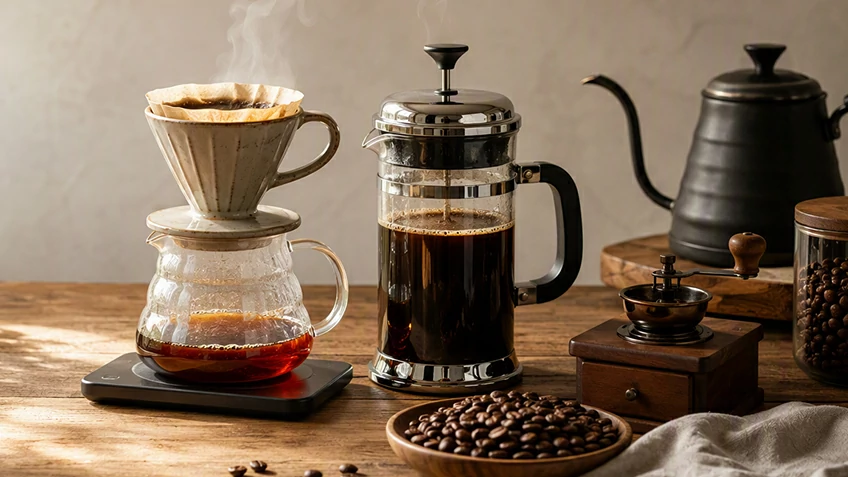
If you are buying good coffee beans but still ending up with a weak, bitter, or disappointing cup, the brewing method may be the missing piece.
Two of the best ways to make excellent coffee at home are pour-over and French press. Both methods are affordable, rewarding, and capable of producing a delicious cup. The difference is in the experience and the flavor: pour-over coffee is usually cleaner and brighter, while French press coffee is fuller, heavier, and more intense.
So which method is better? The honest answer is that it depends on what you enjoy and how you like to make coffee.
This guide compares pour-over and French press coffee, explains how each method works, and gives you reliable recipes for getting started.
The quick answer: Which method should you choose?
Choose pour-over if you prefer:
- Clean, bright, detailed flavors
- More control over the brewing process
- Light- to medium-roasted coffee
- A ritual that rewards patience and precision
- A cup with very little sediment
Choose French press if you prefer:
- Rich, full-bodied coffee
- A simple process with minimal equipment
- Darker roasts and bold flavors
- Making several cups at once
- A forgiving brewing method that does not require perfect technique
Neither method is universally better. They simply highlight different qualities in the same coffee beans.
Pour-over vs. French press: The main differences
| Feature | Pour-over | French press |
|---|---|---|
| Flavor | Clean, bright, nuanced | Rich, bold, full-bodied |
| Filter | Paper filter | Metal mesh filter |
| Grind size | Medium-fine to medium | Coarse |
| Typical brew time | 3–4 minutes | About 4 minutes |
| Control | High | Moderate |
| Cleanup | Usually quick | Requires rinsing and removing grounds |
| Best for | One or two cups | Multiple cups |
| Learning curve | Moderate | Easy |
The most important difference is filtration. Pour-over uses a paper filter that removes most oils and fine particles. French press uses a metal mesh filter, allowing more oils and sediment to remain in the finished coffee.
That is why pour-over tends to taste crisp and tea-like, while French press coffee feels heavier and more textured.
What you need for pour-over coffee
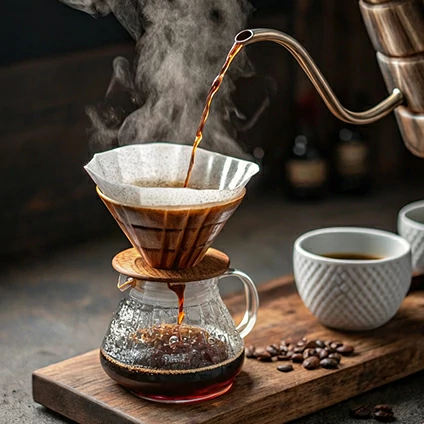
A basic pour-over setup includes:
- A pour-over brewer
- Paper filters
- Fresh coffee beans
- A burr grinder
- A kettle
- A scale, if available
- A mug or carafe
You do not need the most expensive equipment. A consistent grinder and fresh beans will usually make a bigger difference than upgrading to a premium brewer.
A reliable pour-over recipe
Use this recipe as a starting point:
- Coffee: 20 grams
- Water: 320 grams
- Ratio: 1:16
- Water temperature: 90–96°C (195–205°F)
- Grind: Medium, slightly finer than table salt
- Brew time: About 3–4 minutes
How to make pour-over coffee
- Heat the water. Bring it to 90–96°C. If you do not have a temperature-controlled kettle, let boiling water rest for about 30 seconds.
- Rinse the filter. Place the paper filter in the brewer and rinse it with hot water. This removes papery flavors and warms your brewing vessel.
- Grind the coffee. Grind 20 grams of coffee to a medium consistency.
- Add the coffee. Pour the grounds into the filter and gently shake the brewer to create an even bed.
- Bloom the coffee. Pour about 40–50 grams of water over the grounds and wait 30–45 seconds. This allows trapped carbon dioxide to escape.
- Continue pouring. Slowly add the remaining water in controlled circles. Avoid pouring directly onto the paper filter.
- Let it drain. The total brew should finish in roughly three to four minutes.
- Swirl and taste. Gently swirl the coffee before drinking to combine the flavors.
Pour-over brewing rewards consistency. Try to pour at a steady speed and keep the coffee bed evenly wet.
What you need for French press coffee
A French press setup is even simpler:
- A French press
- Fresh coffee beans
- A burr grinder
- A kettle
- A spoon or stirrer
- A timer
A scale is helpful, but you can start with a measuring spoon if necessary. The French press is especially convenient when you want to brew several cups without carefully controlling every pour.
A reliable French press recipe
Start with:
- Coffee: 30 grams
- Water: 480 grams
- Ratio: 1:16
- Water temperature: 90–96°C (195–205°F)
- Grind: Coarse
- Brew time: 4 minutes
This recipe makes approximately two medium-sized cups, depending on your serving size.
How to make French press coffee
- Heat the water. Bring it to 90–96°C. Water that is too hot can make the coffee taste harsh.
- Grind the coffee. Use a coarse grind, similar to coarse sea salt.
- Add the coffee. Place the grounds in the empty French press.
- Pour in the water. Add all 480 grams of water, making sure every ground becomes wet.
- Stir gently. Give the coffee one or two gentle stirs.
- Place the lid on top. Do not press the plunger yet.
- Brew for four minutes. Use a timer for consistency.
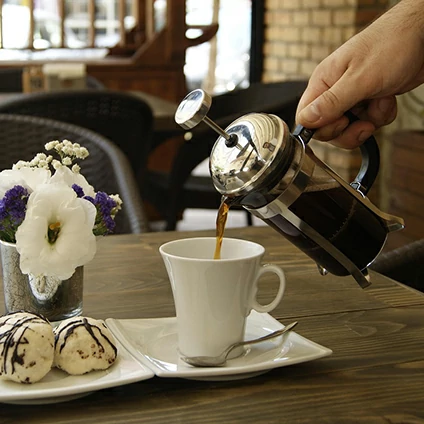
- Break the crust. Gently stir the coffee once more, then slowly press the plunger down.
- Serve immediately. Pour the coffee into cups instead of leaving it in the French press, where it will continue extracting and may become bitter.
French press coffee is less sensitive to pouring technique than pour-over. The most important details are the coarse grind, correct brew time, and gentle plunging.
Which method produces better flavor?
That depends on the beans and your preferences.
Pour-over is excellent for coffees with delicate, distinctive flavors. Light-roasted beans from places such as Ethiopia or Kenya may show floral, citrus, berry, or tea-like notes when brewed with a paper filter.
French press works well with coffees that benefit from extra body and richness. Medium- and dark-roasted beans may taste chocolatey, nutty, caramel-like, or smoky when brewed with immersion.
If you enjoy tasting subtle differences between coffee origins, pour-over may be more exciting. If you want a comforting, bold cup with a rich mouthfeel, French press may be the better choice.
Common mistakes with both brewing methods
Using stale coffee beans
Freshness matters more than many people realize. Store beans in an airtight container away from heat, light, and moisture. Avoid buying more coffee than you can use within a few weeks after opening.
Grinding too early
Coffee begins losing aroma soon after grinding. For the best flavor, grind immediately before brewing.
Using the wrong grind size
Grind size controls how quickly water extracts flavor from coffee. A grind that is too fine can create bitterness and slow brewing. A grind that is too coarse can produce weak or sour coffee.
Using poor-tasting water
Coffee is mostly water, so the quality of your water matters. If your tap water tastes strongly of chlorine or minerals, try filtered water.
Changing everything at once
If your coffee tastes wrong, adjust one variable at a time. Start with grind size, since it usually has the biggest effect.
How to fix bitter, sour, or weak coffee
If your coffee tastes bitter or harsh
Try:
- Grinding slightly coarser
- Lowering the water temperature
- Reducing the brew time
- Using a lighter roast
If your coffee tastes sour or sharp
Try:
- Grinding slightly finer
- Increasing the brew time
- Using hotter water
- Checking that all the grounds are fully saturated
If your coffee tastes weak or watery
Try:
- Increasing the amount of coffee
- Using less water
- Grinding slightly finer
- Checking whether your beans are stale
Make small adjustments and taste the result before changing anything else.
Pour-over or French press: Which is better for beginners?
French press is usually the easiest starting point. It requires less technique, makes multiple servings, and produces a satisfying cup with a simple four-minute process.
Pour-over is a better choice if you enjoy experimenting. It gives you more control over water flow, timing, and extraction, making it easier to fine-tune the flavor. It can take a few attempts to develop a consistent pouring technique, but the results can be remarkably clear and complex.
If you are unsure, start with French press for convenience and add pour-over later when you want to explore more precise brewing.
Final verdict
Pour-over and French press coffee can both produce an excellent cup at home. The best choice comes down to the flavor and routine you prefer:
- Choose pour-over for clean, bright, detailed coffee.
- Choose French press for rich, full-bodied, forgiving coffee.
Whichever method you choose, focus on the fundamentals: use fresh beans, grind just before brewing, measure your coffee and water, and make one adjustment at a time.
Perfect coffee is not about owning the most expensive equipment. It is about finding a repeatable method that makes your favorite beans taste their best.
Which brewing method do you prefer: pour-over or French press? Share your favorite beans, equipment, or brewing tip in the comments.