
For many people, the first thing they do in the morning is reach for a hot cup of coffee.
Before breakfast.
Before water.
Sometimes even before getting fully out of bed.
But this common habit raises an important question: is coffee on empty stomach actually bad for you?
The short answer is: for most healthy adults, it is generally safe.
However, the full answer depends on your body, your digestion, and your sensitivity to caffeine.
Some people feel perfectly fine drinking coffee first thing in the morning.
Others experience acid reflux, jitters, nausea, or a sudden urge to use the bathroom.
So, let’s look at what science actually says.
Is It Okay to Drink Coffee on an Empty Stomach?
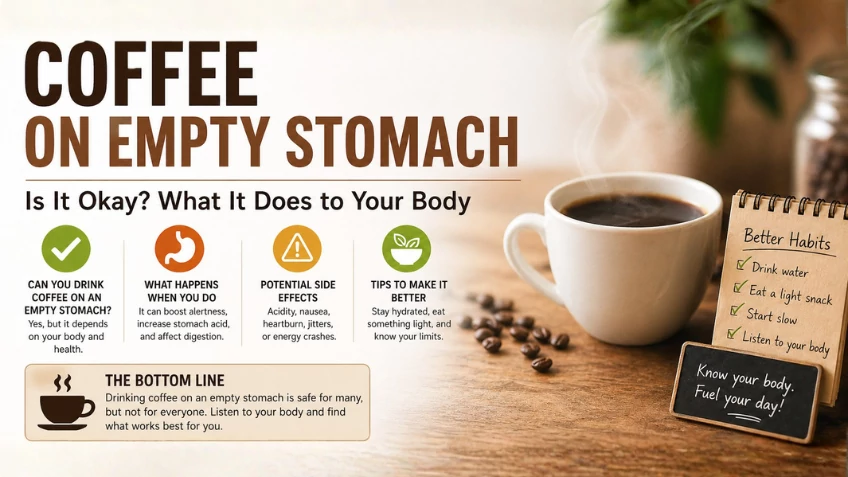
Yes, for most people, drinking coffee on an empty stomach is okay.
There is a common myth that coffee “damages” the stomach lining when consumed without food.
Current evidence does not support that idea for healthy individuals.
Your stomach naturally produces acid.
Coffee can stimulate more acid production, but this does not automatically mean harm.
For people without digestive issues, this increase is usually well tolerated.
Medical experts generally agree that coffee on empty stomach is not dangerous for most adults.
That said, “safe” does not always mean “comfortable.”
Some people simply feel better when they eat first.
What Happens When You Drink Coffee on an Empty Stomach?
The effects can vary from person to person.
Here are the most common things that happen when you drink coffee without eating first.
Faster Caffeine Absorption
One of the biggest differences is speed.
When your stomach is empty, caffeine enters your bloodstream more quickly.
This means the effects may feel stronger and faster.
You may notice:
- quicker alertness
- more energy
- sharper focus
- a stronger caffeine kick
For some, this feels great.
For others, it may feel overwhelming.
Increased Stomach Acid
Coffee naturally stimulates acid production.
This may lead to:
- heartburn
- acid reflux
- mild stomach discomfort
- nausea
This is especially common in people with GERD, gastritis, or sensitive digestion.
Stronger Urge to Use the Bathroom
Coffee can stimulate the digestive tract.
Many people notice that it helps “get things moving” in the morning.
This is normal.
Coffee increases hormones involved in digestion and bowel movement.
For some people, drinking coffee on an empty stomach may intensify this effect.
More Jitters or Anxiety
Because caffeine is absorbed faster, some people may feel:
- shaky
- anxious
- restless
- heart palpitations
If this happens often, eating something first can help reduce the intensity.
Can Drinking Coffee on an Empty Stomach Cause Acid Reflux?

This is one of the most common concerns.
The answer is: it can worsen symptoms if you are already prone to reflux.
Coffee itself does not directly “cause” acid reflux in everyone.
But it may trigger symptoms in people who already have:
- GERD
- heartburn
- ulcers
- sensitive stomachs
Coffee can relax the lower esophageal sphincter, which is the muscle that helps keep stomach acid from moving upward.
When this muscle relaxes too much, acid may rise into the esophagus.
This causes that familiar burning sensation.
If this sounds familiar, try drinking coffee with:
- oatmeal
- toast
- yogurt
- eggs
- banana
- avocado toast
Even a light breakfast can help.
Does Coffee on Empty Stomach Increase Stress Hormones?
You may have heard that coffee spikes cortisol.
This is partly true.
Caffeine can temporarily increase cortisol, the body’s natural stress hormone.
But this is not usually harmful.
The rise is temporary and tends to be smaller in regular coffee drinkers due to tolerance.
This is not the same as chronic stress.
For most people, it is simply part of caffeine’s stimulating effect.
However, if you already struggle with anxiety, drinking coffee before eating may make you feel more tense.
Who Should Avoid Coffee on Empty Stomach?
While many people tolerate it well, it may not be ideal for everyone.
You may want to avoid coffee on empty stomach if you have:
- acid reflux
- gastritis
- IBS
- anxiety disorders
- high caffeine sensitivity
- history of nausea in the morning
People with these issues often feel better when coffee is paired with food.
Listen to your body.
Your own response matters more than internet myths.
Best Ways to Drink Coffee in the Morning
If you enjoy your morning coffee but want to reduce side effects, here are some simple strategies.
Eat Something Light First
A small meal can make a big difference.
Good options include:
- toast
- banana
- oatmeal
- yogurt
- nuts
This slows caffeine absorption and reduces stomach irritation.
Avoid Too Much Sugar
Sugar and caffeine together may lead to:
- quick energy spikes
- energy crashes
- increased hunger
- stronger jitters
Try drinking it black or with a small amount of milk.
Don’t Drink It Too Late
Even morning coffee can affect sleep if consumed too late in the day.
Try keeping it before early afternoon.
Final Answer: Is Coffee on Empty Stomach Bad?
It is generally safe for most healthy adults.
It does not damage your stomach or cause serious harm on its own.
However, it may cause stronger caffeine effects, digestive discomfort, or reflux in some people.
So the real answer is personal.
If you feel good, it is fine.
If you notice heartburn, nausea, or jitters, eating first may help.
The best rule is simple:
listen to your body and adjust your routine accordingly.
That is the healthiest long-term approach.